The top land clearing mistakes we see across Gippsland — and how to avoid them
Clearing a rural block sounds simple… until you’re knee-deep in blackberry, clay, hidden stumps, and a machine that wasn’t built for the job. We see the same mistakes pop up across Gippsland all the time — from Warragul to Traralgon to East Gippy bush blocks — and most of them cost people time, money, or their soil.
Here are the biggest ones to avoid.
1. Clearing at the wrong time of year
A lot of people wait until the middle of fire season or the wet season to start clearing.
Bad combo.
In summer, operators book out and the ground is dry and risky.
In winter, everything’s wet, slippery, and harder to mulch cleanly.
Better approach:
Book your clearing in late winter through spring when regrowth is manageable, the ground isn’t too soft, and you can actually see what you're cutting.
2. Using the wrong machine for the job
We see this constantly — someone hires a skid steer too small, or a dozer that’s way too aggressive for the type of scrub they’ve got.
Wrong machine = messy results.
Light machines struggle with thick saplings.
Big dozers tear up soil you actually want to keep.
Mulching solves this by:
Cutting and grinding vegetation in one pass, without tearing up the ground underneath.
3. Scalping the soil (taking off more than you should)
Some contractors clear everything down to bare dirt. Looks clean for a day, but then:
You get erosion
Nutrients disappear
Weeds come back quicker
Topsoil blows away in the wind
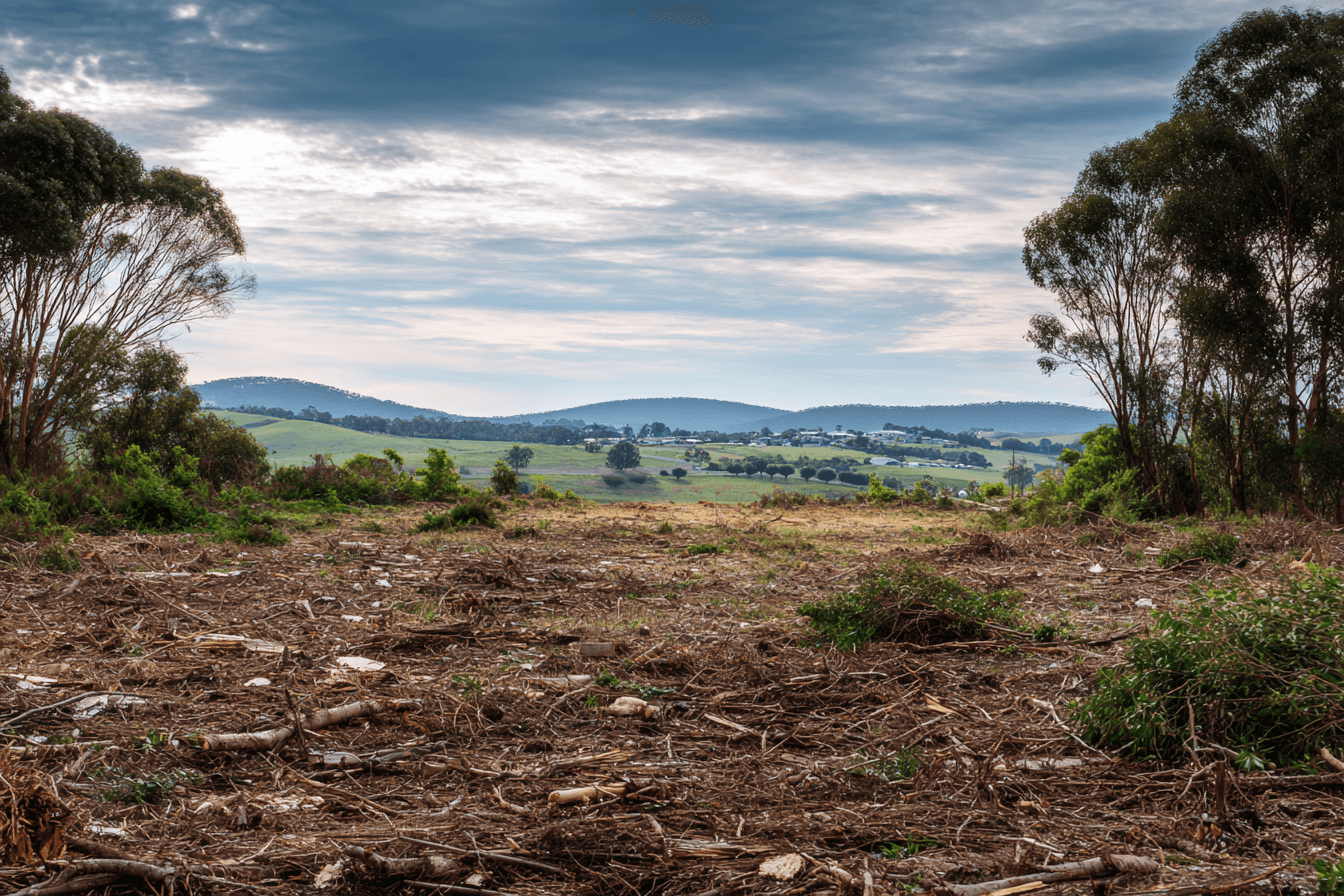
Mulching avoids this because you’re leaving a protective layer behind — it feeds the soil instead of stripping it.
4. Leaving roots and regrowth to come back thicker
A lot of DIY clearing only hits the surface. Weeks later?
Blackberry, tea-tree, and wattle come back twice as dense.
Good mulching grinds material low enough to slow regrowth and gives you a clean start for pasture, fencing, or long-term management.
5. Not planning the layout before you clear
People often mulch “where it looks bad” instead of thinking about:
Future tracks
Firebreaks
Fencelines
Drainage
Property access
A bit of planning saves huge headaches — especially on uneven Gippsland country where the terrain can change fast.
6. Leaving debris piles everywhere
Push-and-burn or DIY clearing often leaves piles scattered across a block. They:
Attract snakes
Increase fire risk
Kill grass underneath
Are expensive to remove later
Mulching avoids this completely because everything is processed on the spot.
7. Trying to rush the whole block in one day
You don’t need to clear everything at once.
Trying to smash through a massive job usually leads to patchy work, missed areas, and more regrowth later.
Clearing in stages often gets better results — start with access, firebreaks, and the thickest scrub first.
How to avoid these problems? Proper mulching and a solid plan.
When you use the right machine, at the right time, with a clear plan, you get:
Cleaner finishes
Better soil health
Slower regrowth
Safer fire season prep
A property that’s easier to use long-term
Gippsland blocks can be tough — steep gullies, wet patches, clay, and dense scrub — but with proper forestry mulching, you can handle it all without wrecking the land.
Want clearing done properly?
We handle mulching and land clearing across Gippsland and rural Victoria with fair, honest work, the right gear, and no shortcuts.
Contact us for a quote and let’s get your property looking the way it should.